
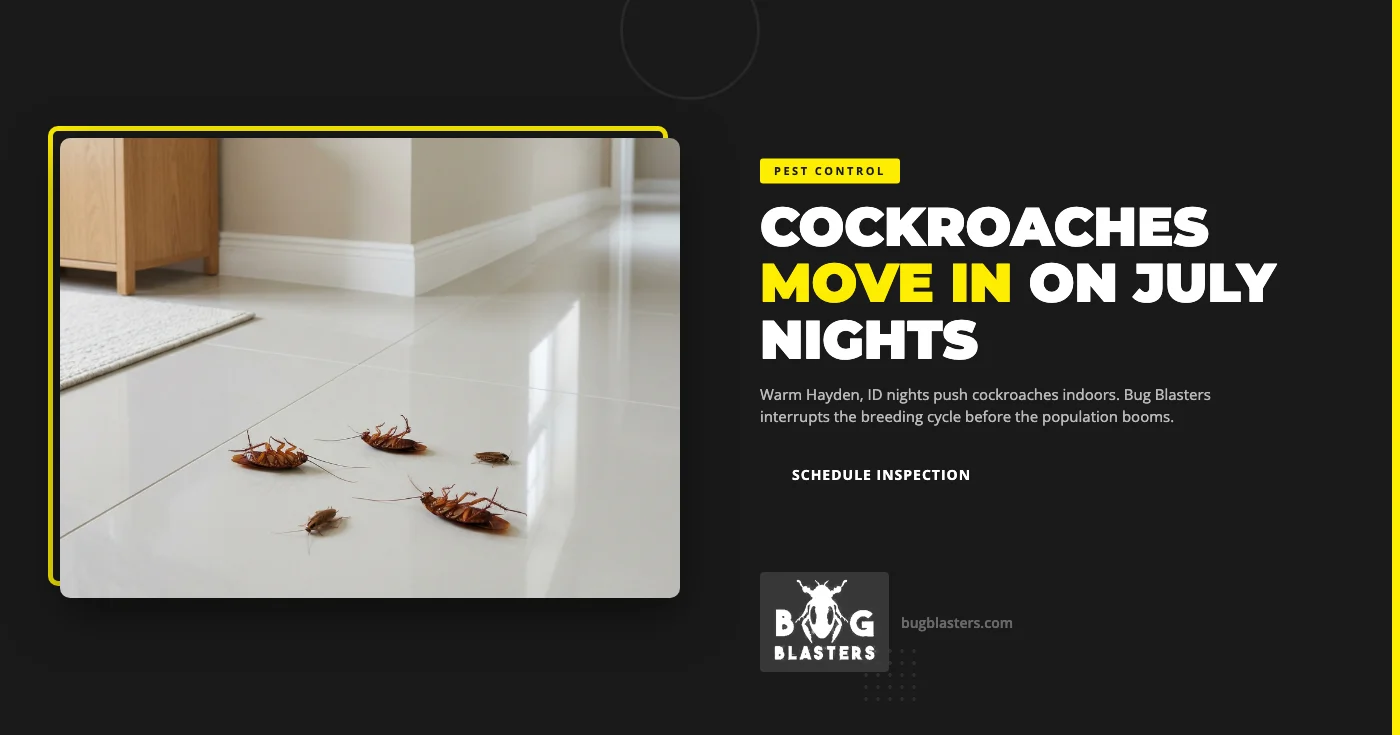
If you live in Hayden, ID, you have probably noticed the pattern. Mid-July brings 85-degree afternoons that finally cool into the mid-60s after dark — and that first warm week is when our phones at Bug Blasters start ringing about cockroaches. A shape darts across the kitchen tile at 11 p.m., a rust-brown streak appears along the baseboard, or a musty smell settles under the sink. Cockroach control in Hayden, ID gets much harder once a summer population takes hold, and July is the month that separates a manageable inspection from a compounding infestation.
At Bug Blasters, we handle cockroach work across Hayden, Coeur d'Alene, Post Falls, Rathdrum, Hayden Lake, and the rest of the North Idaho panhandle. This guide covers why July nights push roaches indoors, which species show up, where they hide, the health hazards they create, and the prevention steps that shut the door before fall.
Why July Weather Draws Cockroaches Into Hayden Homes
North Idaho summers are not tropical, and that catches Hayden homeowners off guard when cockroaches show up. Hayden averages an 83°F high and a 54°F low in July at around 50% humidity, with almost no rain. It sounds like the wrong climate for a moisture-loving insect — until you look at what is happening inside the home.
Three shifts happen together in July. First, warm dry ground pushes American and oriental cockroach populations out of yard debris, sprinkler boxes, and irrigation valve pits toward damper harborage under crawl spaces and foundation slabs. Second, the warmest July nights — 60°F to 70°F — are the peak activity window for outdoor species, which forage from dusk until a few hours before dawn and probe every foundation crack and door threshold. Third, indoor conditions stay warm and humid year-round: AC condensation, longer showers, more cooking, and open patio doors amplify the food, water, and warmth signal cockroaches use to find harborage.
German cockroaches already breeding inside heated buildings also accelerate in July. A single female carries an ootheca of 30 to 48 eggs and produces up to eight cases in her lifetime. With three to four indoor generations per year, a January population of a dozen adults can push past a thousand by August. The mid-summer call our team gets most is from a Hayden homeowner who saw one roach in May, thought nothing of it, and now sees several a night in the kitchen.
Cockroach Species Found in North Idaho
Effective cockroach control in Hayden, ID starts with correct identification. Different species hide in different places and respond to different treatments — a technician who skips species ID and starts spraying will miss the population driving the infestation. Around Hayden we encounter three species with any regularity:
- German cockroach — the most common indoor roach across North Idaho and, per the U.S. EPA, the most common cockroach in the United States. About a half-inch long, light tan to brown, with two dark parallel stripes down the back of the head. They rarely fly, live exclusively inside heated buildings, prefer kitchens and bathrooms, and reproduce faster than any other pest species. Most of the multi-family, restaurant, and rental infestations we see in Hayden trace back to this species.
- American cockroach — much larger, reddish-brown, up to one and a half inches long, with a yellow figure-8 behind the head. Prefers warm, damp, dark places: sewer lines, basements, crawl spaces, and floor drains. Around Hayden they turn up most in older homes with humid crawl spaces, cabins near Hayden Lake with unfinished basements, and commercial buildings around grease traps.
- Oriental cockroach — dark brown to black, roughly an inch long, slow-moving, drawn to cool damp spots like drains, garages, and basement utility rooms. Less common, but not rare in Panhandle homes with persistent crawl-space moisture.
Brown-banded cockroaches appear occasionally, but the workload in Hayden is dominated by German cockroaches in kitchens and American cockroaches in damp basements. Species ID is not academic — it decides where we place bait, which actives we rotate, and how many follow-ups the plan needs.
Common Entry Points and Hiding Spots
German cockroaches fit through cracks as small as 3/8 of an inch and choose harborage that is warm, dark, narrow, and close to food and water. American cockroaches migrate in through much larger gaps — sewer laterals, floor drains, and dryer vents. After hundreds of Hayden inspections, the same zones come up repeatedly.
Entry points we recheck first:
- Gaps around exterior door thresholds and weather stripping, especially garage-to-interior doors propped open in summer.
- Foundation cracks and utility penetrations for electrical, gas, and water lines.
- Crawl-space vents with damaged or missing screens.
- Floor drains with dry P-traps — common in low-use basements and garages.
- Cardboard boxes, second-hand appliances, and grocery bags carrying hitchhiking egg cases across the threshold.
Once inside, cockroaches head for these harborage zones:
- Inside and behind kitchen appliances — refrigerator motor housings, under the dishwasher, behind the microwave, inside toaster and coffee-maker bases.
- Under-sink cabinets, where plumbing penetrations create moisture and gaps into wall voids.
- Behind kick plates and inside drawer slides — tight, undisturbed, right next to food.
- Bathroom vanities, tub overflow plates, and toilet bases in older Hayden homes with a bit of leak history.
- Pantry cardboard storage — near-perfect harborage, glued with starch-based adhesives cockroaches will chew.
- Wall voids around plumbing risers — the "we treated the kitchen and they came back" zone in duplexes.
- Crawl spaces and basement utility areas around water heaters, sump pumps, and floor drains — prime American cockroach territory.
Health Hazards of a Cockroach Infestation
Cockroaches are not just unpleasant — they are a documented health issue, and the concern rises quickly in households with children, older adults, or anyone with asthma. According to the U.S. Environmental Protection Agency, "cockroach feces, skin sheddings and saliva can cause asthma and allergies, especially in children," and cockroaches also carry bacteria including salmonella, staphylococcus, and streptococcus as they travel between drains, trash, and food-contact surfaces.
The National Pesticide Information Center reports that allergens shed in droppings, saliva, and molted skins are a documented asthma trigger, with studies finding cockroach allergen in the majority of U.S. urban homes surveyed. In children with asthma, sensitivity to cockroach allergen is one of the most common findings on clinical skin testing.
The takeaway for Hayden homeowners: cockroach control is not just cosmetic. Even a moderate infestation seeds indoor air with allergens a HEPA filter alone will not fully catch, so reducing the population is the intervention, and deep cleaning of harborage zones after knockdown is what removes the residual allergen load. That is why we build sanitation recommendations into every treatment plan.
Cockroach Prevention Tips for Hayden Homeowners
July is the right window to act, before compounding summer breeding pushes the population into August and September. The steps below give Hayden homeowners a strong defense and pair well with our recurring cockroach pest control service, ordered by leverage.
- Cut off the water supply. German cockroaches can live a month without food but only about a week without water. Fix dripping faucets, replace leaking supply lines under sinks, caulk tub and shower edges, and wipe sinks dry before bed. In basements and crawl spaces, address standing water and add a dehumidifier if humidity stays above 60%.
- Tighten kitchen sanitation. Move dry goods into hard-sided sealed containers, run the dishwasher every night, vacuum behind counters weekly, and pull the refrigerator and stove out to clean behind them quarterly. Sanitation is the highest-leverage step against German cockroaches.
- Seal harborage gaps. Caulk where plumbing enters walls under sinks and behind toilets. Use foam or stainless mesh around electrical and gas lines. Replace torn weather stripping, add door sweeps, re-screen damaged crawl-space vents, and prime low-use floor-drain P-traps with a monthly cup of water.
- Inspect what comes in. German cockroaches are notorious hitchhikers. Check grocery bags, second-hand appliances, used furniture, and cardboard boxes before they cross the threshold. Homeowners renting Hayden Lake cabins should also inspect bags and gear before bringing them home.
- Get a professional summer inspection. A trained technician maps harborage, confirms the species, and places pest-specific gel baits and insect growth regulators into the void spaces where the population lives — breaking the cycle before late-summer peak.
Over-the-counter sprays rarely solve a real infestation. Contact-kill actives dry fast on hard surfaces and rarely reach the wall voids and appliance interiors where the population lives. Pacific Northwest German cockroaches also carry documented resistance to several pyrethroids, so a spray that worked in a rental last summer may do nothing in a Hayden kitchen this July. Total-release foggers are worse — they scatter roaches deeper into wall voids, turning a one-room problem into a whole-house one.
How Bug Blasters Handles Cockroach Infestations
Our approach to cockroach control in Hayden, ID looks different from a can of grocery-store spray. Every job starts with an inspection that identifies the species, locates harborage, and pinpoints the moisture and food sources feeding the colony. From there we build a treatment plan that fits the property — a single-family home in Hayden gets a different plan than a multi-family building near Government Way or a Hayden Lake summer rental.
Treatment typically pairs gel baits placed into harborage voids with an insect growth regulator that stops juveniles from reaching reproductive age. We rotate actives to manage resistance, apply targeted dusts inside appliance housings sprays cannot reach, and treat exterior entry points and crawl-space perimeters when the species is American or oriental. Follow-ups are timed to the egg-hatch cycle — usually two to three weeks after the initial visit, with a third check at six to eight weeks for heavier infestations.
Where DIY effort tends to break down is on the sanitation and exclusion side. A treatment plan without changes to leaky plumbing, cardboard storage, or crumb build-up behind the stove rebounds within months. We build those recommendations into every visit so the household ends the cycle with a real defense against re-infestation, not just a temporary knockdown.
Frequently Asked Questions About Cockroach Control in Hayden, ID
Why am I suddenly seeing cockroaches in my Hayden home in July?
German cockroaches live year-round inside heated buildings, and July conditions accelerate everything. Reproduction speeds up, outdoor American cockroaches migrate in from yard debris and crawl spaces, and warm summer nights are their peak activity window. A population that ticked along quietly through spring often shows its first visible sightings in July.
How can I tell if I have German cockroaches?
Look for a half-inch-long, light-tan roach with two dark parallel stripes behind the head, almost always in kitchens or bathrooms. Supporting evidence: pepper-grain droppings along counter backs, brown smear marks on baseboards, kidney-bean-sized egg cases behind kick plates or inside appliance motors, and a musty odor in cabinets. A daytime sighting usually means the hidden population has outgrown its primary harborage.
Are cockroaches in Hayden a health concern?
Yes. The U.S. EPA notes that cockroach droppings, shed skins, and saliva are documented asthma and allergy triggers, particularly in children. Cockroaches also transport bacteria from drains and trash onto food-contact surfaces, making a growing indoor population a real indoor-air-quality issue.
How long does professional cockroach treatment take to work?
For a German cockroach infestation, expect noticeable reduction within one to two weeks of the initial visit and a follow-up at three to four weeks to hit the next generation as eggs hatch. Heavier infestations often need a third visit at six to eight weeks. Single-visit treatments almost always relapse because oothecae resist most actives and only hatch after the initial application.
Does Bug Blasters treat cockroaches at cabins around Hayden Lake?
Yes. Hayden Lake vacation rentals see high summer turnover, which raises the odds of hitchhiking egg cases arriving with guest luggage and groceries. We handle single-visit summer inspections for property managers and recurring plans for year-round Hayden residents. Contact our team through our contact page to schedule a walkthrough. We serve Hayden, Hayden Lake, Coeur d'Alene, Post Falls, Rathdrum, and the rest of the North Idaho Panhandle.