
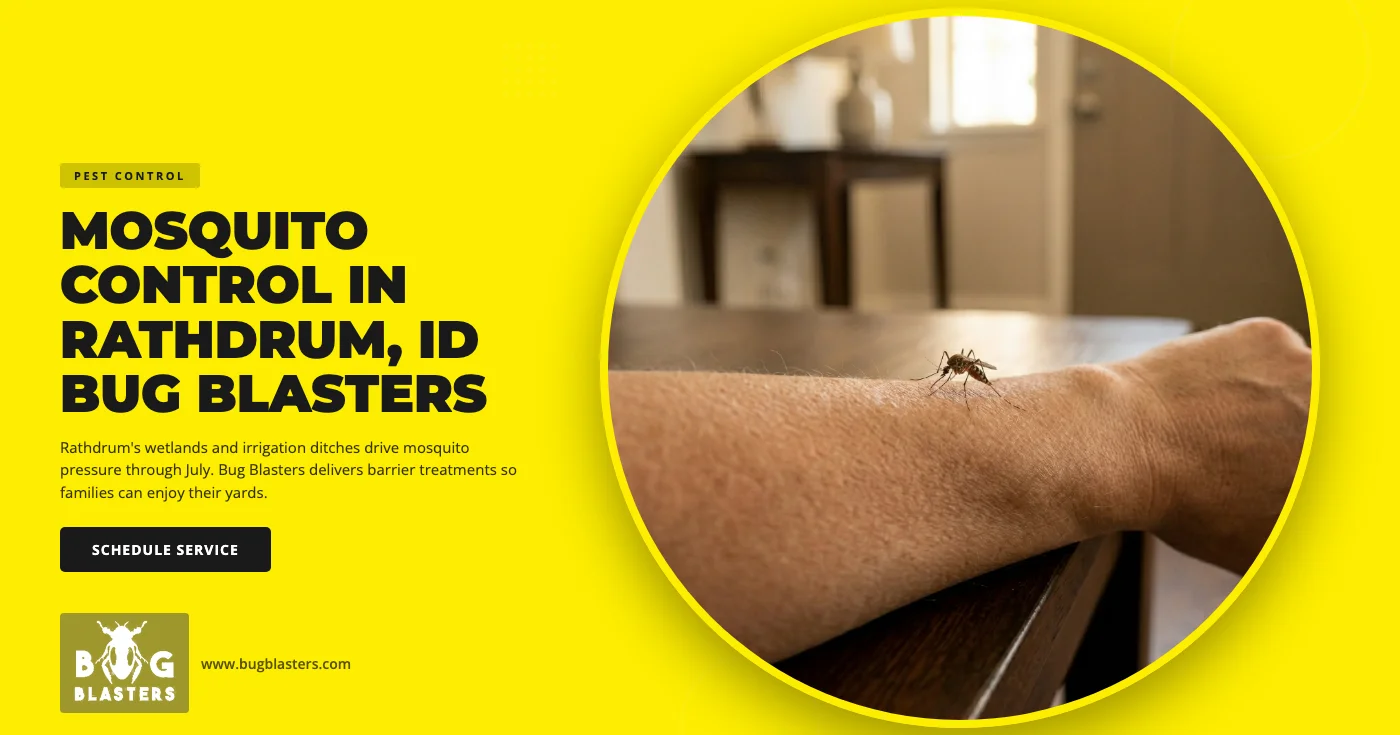
Rathdrum, ID sits in the heart of Kootenai County — a region of lakes, rivers, and wetlands that makes North Idaho one of the most beautiful places to live in the Pacific Northwest. It also makes it one of the most mosquito-active areas in Idaho every summer. The lakes, sloughs, and natural water features that define the Rathdrum Prairie landscape provide natural breeding habitat for mosquitoes throughout the warm season, from May well into September.
At Bug Blasters, we provide professional mosquito control services in Rathdrum, ID and throughout Kootenai County. Here's what every Rathdrum homeowner should understand about summer mosquito activity in North Idaho — and what professional treatment can do for your outdoor spaces.
Why Mosquitoes Are So Bad in Rathdrum Every Summer
Rathdrum Prairie's geography creates near-ideal conditions for mosquito breeding. The Rathdrum Aquifer, the natural wetlands bordering Rathdrum Creek and the surrounding drainages, and the proximity to Lake Coeur d'Alene, Hayden Lake, and the Spokane River system all contribute to elevated ambient mosquito pressure that no individual homeowner can fully control through yard maintenance alone.
Summer temperatures in Kootenai County reach into the 90s for weeks at a time, accelerating mosquito development. At 85°F, mosquitoes can go from egg to biting adult in 10 to 14 days. With multiple generations developing simultaneously through June, July, and August, peak season mosquito populations can be intense even on properties with no standing water of their own.
North Idaho's snowmelt-driven spring runoff creates widespread temporary standing water in low-lying areas, fields, and roadside ditches from April through May. This early-season breeding contributes significantly to the summer mosquito population — the large floodwater Aedes species that emerge from snowmelt water are strong fliers that can travel miles from their breeding site to reach residential areas.
Idaho's mosquito season extends later into the fall than many residents expect. Culex mosquitoes — the species associated with West Nile virus in Idaho — remain active through August and into September in Kootenai County, maintaining disease-transmission risk well past the peak of summer.
Where Mosquitoes Breed on Rathdrum Properties
While mosquito pressure in Rathdrum is partly driven by natural water features beyond any homeowner's control, the breeding sources closest to your home have the most direct impact on the mosquitoes biting you in your yard. Eliminating or treating these sources provides the most targeted impact on your immediate outdoor environment.
Common breeding sources on Rathdrum residential properties include: gutters clogged with debris that hold water between rains; decorative water features and bird baths without aeration; irrigation system low-spots that pool after watering cycles; tarps, boat covers, and equipment covers that collect water in depressions; containers — buckets, plant saucers, unused pots — left outside; and low-lying areas of the yard that hold water after heavy rain or irrigation.
In rural or semi-rural properties common in Rathdrum, additional sources include old vehicle tires left outdoors (a single tire can produce hundreds of adult mosquitoes), animal water troughs that aren't changed regularly, irrigation ditches with slow-moving or pooled water, and ornamental ponds or water features without mosquitofish or aeration.
For properties near wetlands, agricultural fields, or natural drainages, mosquitoes from nearby natural breeding areas will also be present regardless of source reduction on the property itself. In these situations, professional yard treatment provides control that source reduction alone cannot achieve.
Mosquito-Borne Illness Risks in North Idaho
Idaho reports West Nile virus cases in humans and animals each summer, with the majority of confirmed human cases concentrated in the southern part of the state. However, the Culex mosquitoes responsible for West Nile virus transmission are present throughout Idaho, including Kootenai County, and surveillance-positive traps are detected in the region annually.
Most West Nile infections in humans produce mild or no symptoms. A small percentage of infected individuals — particularly those over 50 and those with certain health conditions — develop neuroinvasive disease including meningitis or encephalitis, which can cause serious and lasting health effects. Horses are particularly vulnerable to West Nile disease and should be vaccinated annually, especially in regions with active Culex mosquito populations.
Eastern equine encephalitis (EEE) has been detected in Idaho, though at lower rates than in eastern states. Like West Nile, the risk of serious neurological illness from EEE is highest for older individuals and those with compromised immune systems. Avoiding evening and nighttime exposure during peak mosquito season and using effective repellents are important personal protection steps.
Dog heartworm — transmitted by mosquitoes — is a risk for dogs throughout Idaho during mosquito season. Dogs in Kootenai County should be on veterinarian-recommended heartworm prevention year-round.
DIY Mosquito Prevention Tips for Rathdrum Homeowners
Source reduction — eliminating standing water — is the foundation of any mosquito management program. Walk your property weekly during the active season and dump, drain, or cover any water that has been standing for more than 48 hours.
For ornamental ponds and water features, add aeration or circulation to prevent water from stagnating. Apply Bti mosquito dunks (a biological larvicide available at hardware stores) to water features that can't be fully circulated. Idaho Fish and Game allows the use of mosquitofish in ornamental ponds; contact Idaho Fish and Game or your local extension office for guidance.
Trim dense vegetation and keep grass mowed — adult mosquitoes rest in shaded, humid vegetation during midday heat. Reducing resting habitat near outdoor living areas decreases the number of mosquitoes present when you're using those spaces.
Apply insect repellent with DEET, picaridin, or oil of lemon eucalyptus when spending time outdoors during peak mosquito hours — dawn, dusk, and the hours around them. Mosquitoes in North Idaho can be active through most of the evening during midsummer when temperatures stay warm after dark.
Bug Blasters' Mosquito Control Services for Rathdrum and Kootenai County
Professional mosquito treatment by Bug Blasters applies residual barrier insecticide to the vegetation where adult mosquitoes rest during daylight hours — the underside of leaves, shaded shrubs, ground cover plantings, and ornamental beds adjacent to lawn and outdoor living areas. This treatment dramatically reduces the adult population in your yard and provides ongoing protection as new mosquitoes encounter treated surfaces.
We also apply larvicide to any accessible standing water sources on your property, targeting mosquitoes before they emerge as biting adults. For properties near wetlands or natural water with mosquito breeding pressure beyond the property boundary, barrier treatment of the yard's perimeter and resting vegetation is the primary intervention available.
For maximum effectiveness through the summer season, we recommend a recurring treatment program on a 3-to-4-week interval, matching the treatment cycle to the adult mosquito's lifespan and maintaining barrier protection through the high-pressure months of July and August.
Contact Bug Blasters to learn more about mosquito control services in Rathdrum, ID and throughout Kootenai County. We serve residential and commercial properties across North Idaho with programs designed for the region's specific mosquito species and seasonal patterns.