
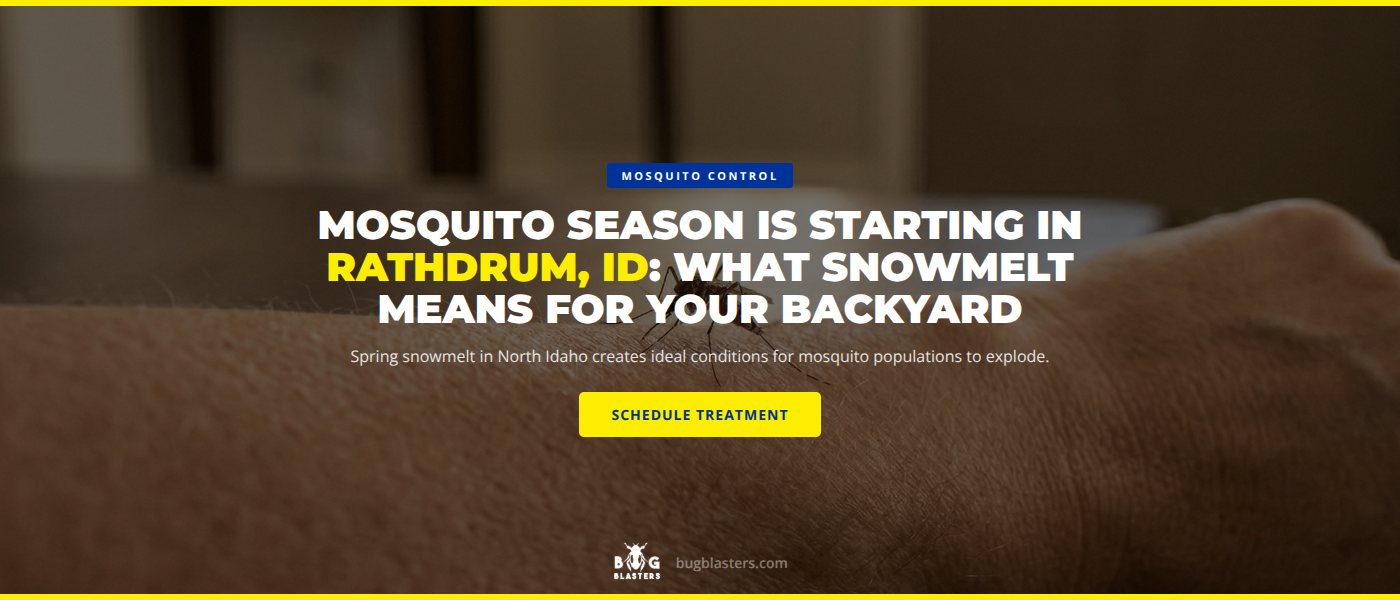
Spring arrives a little differently in Rathdrum, ID. While warmer temperatures and longer days are welcome after a long north Idaho winter, the seasonal snowmelt that turns our landscape green also sets the stage for mosquito season. If you have noticed standing water pooling in your yard as the snow recedes, you are already looking at a prime mosquito breeding ground. Mosquito control in Rathdrum, Idaho is most effective when homeowners understand what drives the spring surge — and act before peak populations arrive.
In North Idaho, mosquitoes are not just a backyard nuisance. They can cut short evenings on the patio and carry viruses that pose real health risks. Rathdrum's position in the Rathdrum Prairie gives mosquitoes ample breeding opportunities each spring. In this guide, we cover why snowmelt fuels mosquito season here, where these pests breed on your property, the health risks they carry, and how we can protect your family before peak season hits.
Why Snowmelt Triggers Mosquito Season in Rathdrum, ID
Rathdrum winters are cold and snowy, but when temperatures climb above 50°F, the region's accumulated snowpack begins melting rapidly. That melt creates the single most important factor in spring mosquito activity: abundant, shallow standing water across yards, fields, and roadside areas throughout the Rathdrum Prairie.
Two primary mosquito species take advantage of snowmelt conditions in northern Idaho. Snow pool mosquitoes — particularly Aedes communis — breed exclusively in temporary pools formed as snow melts. Their eggs, which can survive frozen in the soil over winter, hatch as soon as standing water reaches the right temperature. These floodwater mosquitoes complete their full lifecycle in as little as one to two weeks, meaning a single round of snowmelt can produce a significant population before temperatures cool again.
The local terrain amplifies this effect. Low-lying areas, fields that have not fully drained, roadside ditches, and residential lawns all collect snowmelt runoff. This water does not need to be deep or obvious — a half-inch pooling in a leaf pile, a clogged gutter, or a low lawn area is more than enough. Once temperatures stay above 50°F — typically from early to mid-May in the Rathdrum area — conditions are set for the season's first emergence. By June, early floodwater species give way to Culex mosquitoes that breed in more permanent water through the rest of summer.
Common Mosquito Breeding Spots on Rathdrum Properties
After winter, Rathdrum properties are often full of spots that collect the water mosquitoes need to breed. A tablespoon is technically enough for a mosquito to lay eggs, and as snowmelt runs off rooftops and fills low areas of your lawn, your yard can host dozens of breeding sites without you realizing it.
The most common breeding spots on Rathdrum-area properties include:
- Clogged gutters and downspout trays — leaves and debris trap standing water at roof level throughout spring
- Birdbaths and decorative water features — still water left unchanged for more than a week becomes a larval nursery
- Children's toys, buckets, and tarps — any container left outside accumulates rainwater and snowmelt runoff
- Low lawn spots — areas where snowmelt pools and drains slowly provide short-lived but productive breeding sites
- Pet water bowls left outside — outdoor bowls need to be refreshed daily to prevent development
- Old tires and unused planters — hold water longer than expected, especially in shaded areas
- Irrigation leaks and puddles — drip systems and leaky spigots create persistent moisture patches in garden beds
Beyond standing water, adult mosquitoes need dense vegetation and shade to rest between feedings. Overgrown shrubs, tall grass near fences, woodpiles, and shaded areas beneath decks all provide harborage. Addressing both water sources and harborage areas is key to meaningful mosquito control throughout the season.
Health Risks from Mosquitoes in the North Idaho Region
In North Idaho, mosquito populations are more than a comfort issue — they represent a genuine public health concern. The most significant mosquito-borne disease in the region is West Nile Virus (WNV), transmitted primarily by Culex mosquitoes that become more active as summer temperatures rise and standing water sources stabilize throughout the area.
According to the Idaho Department of Health and Welfare, West Nile Virus has been documented in Idaho mosquito and bird populations, and cases have been confirmed across the state each summer. While most infected individuals experience no symptoms, approximately one in five people develop fever, headache, and body aches. In a smaller percentage of cases — particularly among older adults or people with compromised immune systems — the virus can cause more serious neurological illness.
Beyond WNV, mosquito bites cause immediate disruptions: allergic reactions, secondary infections from scratching, and persistent interference with yard time and entertaining. Families with young children or pets often spend less time outside when mosquito pressure peaks — and lawn upkeep suffers too. Addressing mosquito control in Rathdrum before peak season arrives is far more effective than waiting until bites become a daily problem.
DIY Mosquito Prevention Steps Every Rathdrum Homeowner Can Take
There is a meaningful amount homeowners can do to reduce mosquito populations before calling in a professional. These steps are most effective when started in early to mid-April — before the first spring hatch — and maintained consistently throughout the season.
Eliminate Standing Water Every Week
Walk your property weekly and empty containers that have collected water. Turn over buckets, drain saucers under potted plants, and refresh birdbaths and pet bowls. Mosquito eggs can hatch within seven to ten days, so weekly rounds catch new breeding before populations grow.
Clean Your Gutters Before Snowmelt Peaks
Clogged gutters are one of the most overlooked mosquito breeding grounds on Rathdrum properties. After winter debris accumulates, spring runoff turns gutters into troughs of standing water. Cleaning them in late March or early April removes this breeding site before the season begins.
Use Larvicides in Water You Cannot Remove
For standing water that cannot be eliminated — decorative ponds, rain barrels, catch basins — mosquito dunks containing Bacillus thuringiensis israelensis (Bti) offer a targeted biological approach to preventing larvae from developing. The CDC recommends these biological larvicides as an effective complement to water elimination efforts.
Trim Vegetation and Remove Harborage Areas
Cut back dense shrubs, tall grass, and ground cover near outdoor living spaces. Clear leaf piles and debris from fence lines. Reducing the shade and moisture that adult mosquitoes need to rest between feedings cuts their persistence on your property meaningfully.
When DIY Isn't Enough: Signs You Need Professional Mosquito Control
DIY prevention is a valuable first step, but many Rathdrum homeowners find that source reduction alone is not enough to keep mosquito populations at tolerable levels through an Idaho summer. Several situations point clearly toward the need for professional pest control in Rathdrum, Idaho:
- Persistent biting even after eliminating standing water — adult mosquitoes travel up to a mile from their breeding site, meaning neighboring properties or drainage areas may be sourcing your problem
- Outdoor areas that become unusable at dawn and dusk — if you cannot use your deck or patio during key hours, the population is beyond what source reduction alone can manage
- Properties adjacent to wetlands, drainage channels, or open fields — homes near Rathdrum-area waterways often face natural mosquito pressure that individual homeowners cannot fully control
- Repeated seasons of heavy pressure — if last year's DIY efforts did not deliver lasting relief, a professional program will address what source reduction is missing
Getting ahead of the season with a program covering both larval and adult populations delivers significantly better results than reactive measures taken after the first bad week. Our general pest control and dedicated mosquito services are designed for that full-season protection.
How Bug Blasters Treats and Eliminates Mosquitoes in Rathdrum
Bug Blasters brings targeted, property-specific mosquito control to Rathdrum homeowners and businesses. Our approach combines source identification, barrier treatments, and scheduled follow-up to keep populations under control from the first spring emergence through the end of the season.
Our process starts with a thorough property assessment. Our technicians identify active and potential breeding sites across your yard — including areas that DIY inspections commonly miss, such as beneath decks, inside decorative rock beds, and along drainage areas on property lines. We document harborage zones and tailor the treatment plan to your specific landscape and seasonal conditions.
We apply barrier treatments to the key resting areas adult mosquitoes use between feedings: dense shrubs, the undersides of leaves, fence lines, and shaded border plantings. These treatments provide residual control between visits and significantly reduce adult populations on a consistent basis. For standing water that cannot be fully eliminated, we target larval activity directly.
We serve the greater North Idaho area — including Rathdrum, Post Falls, Coeur d'Alene, Hayden, and surrounding communities — with scheduled service that adapts to each season's conditions. Homeowners who start recurring treatment in early spring see the best results. Reach out through our contact page to schedule a free property assessment. Whether you need seasonal mosquito control in Rathdrum, a combined tick and mosquito program, or a plan for a single outdoor event, we can build the right approach for your property.
Keeping Your Yard Mosquito-Free Through the Full Pacific Northwest Season
In Rathdrum and across North Idaho, mosquito season does not end when the snowmelt pools dry up. Summer rains, irrigation runoff, and warm overnight temperatures keep Culex mosquito populations active from June well into September. Staying ahead of these later-season populations requires treating mosquito control as a recurring commitment, not a one-time project.
Maintaining your own prevention habits — weekly water elimination, lawn drainage, and vegetation trimming — combined with scheduled professional barrier treatments delivers the most consistent results through the Idaho summer. Treating mosquito control as a seasonal routine rather than a one-time effort means better outcomes each year, with fewer surprises at peak season.
Many of our customers in the Rathdrum and Post Falls area start service in April or May to address early-season floodwater mosquitoes and continue with monthly treatments through August or September. We also recommend pairing mosquito control with our wasp control services as late spring arrives — both pests peak at similar times, and addressing them together simplifies your seasonal pest plan. For mosquito control in Rathdrum, Idaho and throughout North Idaho, Bug Blasters is here to help you take back your outdoor spaces.
Frequently Asked Questions About Mosquito Control in Rathdrum
When does mosquito season start in Rathdrum, ID?
Mosquito season in Rathdrum typically begins in early to mid-May when temperatures stay above 50°F and spring snowmelt creates standing water. Floodwater species are often the first to emerge, sometimes as early as late April. By June, populations reach peak activity and can remain high through September or October depending on fall temperatures.
How does snowmelt create mosquito problems in North Idaho?
Melting snow creates shallow, temporary water in lawns, fields, and gutters throughout spring. Snow pool mosquitoes lay eggs that survive frozen in the soil over winter and hatch when snowmelt reaches them — completing a lifecycle in as little as two weeks and creating a population surge before most homeowners think about prevention.
Can homeowners handle mosquito control on their own?
DIY steps like eliminating standing water, cleaning gutters, and using biological larvicides can meaningfully reduce mosquito populations. However, if your yard borders open fields or drainage areas, adult mosquitoes will continue moving in from breeding sites outside your control. Professional treatment with residual barrier applications delivers more consistent, season-long results.
Does Bug Blasters serve Rathdrum, ID for mosquito control?
Yes. Bug Blasters provides mosquito control in Rathdrum, ID and throughout North Idaho, including Post Falls, Coeur d'Alene, Hayden, and Hauser. Contact us through our contact page to schedule your spring assessment before peak season begins.
Are your treatments formulated with families in mind?
Yes. Our technicians follow all label instructions and application guidelines. When you schedule your assessment, we walk you through the specific products and methods used and any steps to take before or after treatment to keep your family and pets comfortable.