
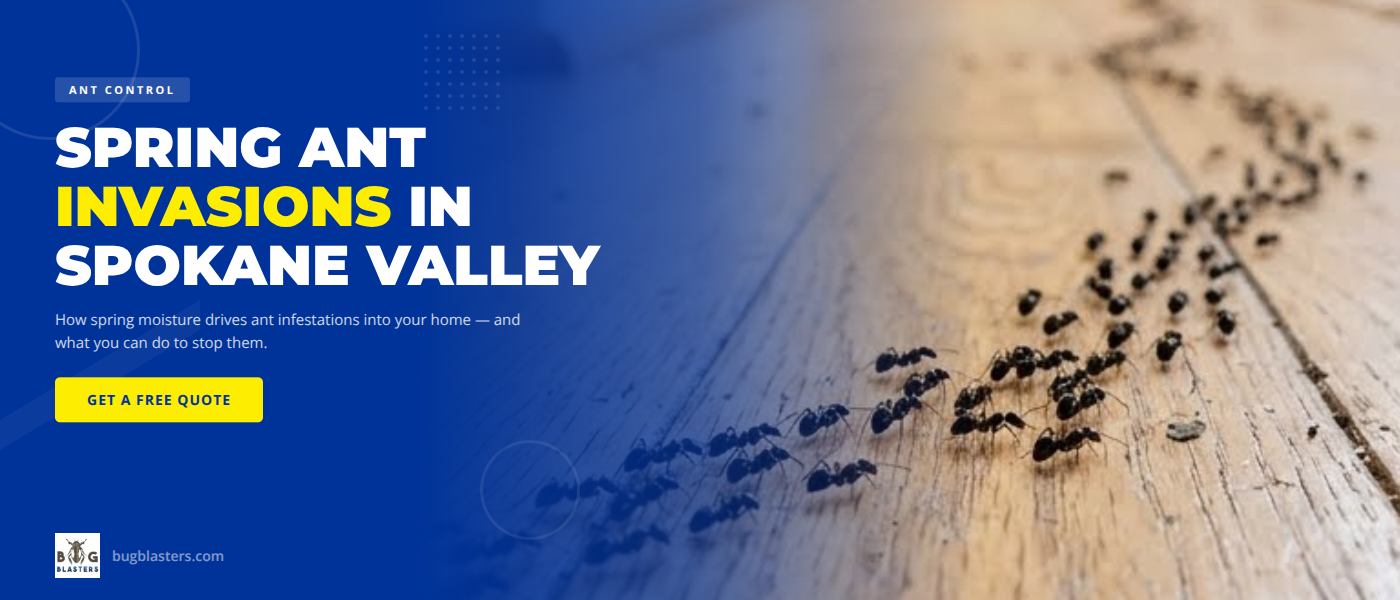
Every spring in Spokane Valley, WA, homeowners start noticing something familiar and frustrating: lines of tiny ants marching across kitchen counters, trailing along baseboards, and congregating near sinks and dishwashers. This annual invasion is not random. It is directly triggered by the seasonal moisture patterns that define the Pacific Northwest spring. At Bug Blasters, we help families across Spokane Valley and the surrounding Inland Northwest communities understand why spring moisture creates the perfect conditions for ant infestations and what you can do to stop them before they take over your home.
Why Spring Moisture Drives Ant Infestations in Spokane Valley, WA
The connection between spring moisture and ant activity in Spokane Valley is well established. After months of cold, snowy winter weather, the spring thaw brings a rapid increase in soil moisture. Snowmelt saturates the ground around foundations, mulch beds, and landscaping features. Rainfall adds to this moisture load, and the combination creates conditions that many ant species find irresistible.
Moisture ants, odorous house ants, and carpenter ants all respond to these wet conditions in different ways. Moisture ants are drawn directly to damp and decaying wood, often establishing colonies inside wall voids near plumbing leaks or in crawl spaces where condensation collects. Odorous house ants use the moist soil pathways created by spring rains to extend their foraging trails from outdoor colonies into your kitchen and pantry. Carpenter ants seek out wood that has been softened by water damage, using it as nesting material to expand their colonies.
When temperatures consistently rise above 50 degrees Fahrenheit and rainfall becomes more frequent in March and April, these ants shift into high gear. Foraging activity increases dramatically, and reproductive swarmers emerge from mature colonies to mate and establish new nesting sites. This is why so many Spokane Valley homeowners suddenly find themselves dealing with ant problems that seem to appear overnight.
Common Ant Species Triggered by Spokane Valley, WA Spring Rains
Understanding which ant species are invading your home is the first step toward effective control. In the Spokane Valley area, three species account for the vast majority of spring infestations.
Odorous House Ants
Odorous house ants are the small, dark brown to black ants you most commonly find trailing through kitchens and bathrooms. They earn their name from the unpleasant, rotten-coconut-like smell they produce when crushed. These ants form large colonies with multiple queens, which makes them particularly difficult to eliminate with store-bought sprays alone.
In Spokane Valley, odorous house ants typically become active in late March to early April as temperatures warm. They establish foraging trails along foundation lines, fence rails, and kitchen baseboards. They are strongly attracted to sweet foods, sugary spills, and any moisture sources inside your home. A single colony can contain tens of thousands of workers, and they frequently split into satellite colonies when disturbed, making improper treatment counterproductive.
Carpenter Ants
Carpenter ants are the largest ant species in the Pacific Northwest, and they are the most important structural insect pest in the region. Unlike termites, carpenter ants do not eat wood, but they excavate galleries inside it to build their nests. They are particularly attracted to wood that has been softened by moisture damage, which is why spring conditions in Spokane Valley create such ideal opportunities for them.
You may notice large black ants, sometimes measuring half an inch or more, traveling along the exterior of your home or emerging from wall voids. Piles of fine sawdust-like frass near baseboards, window frames, or door jambs are a telltale sign of carpenter ant activity. Left untreated, carpenter ant damage can compromise the structural integrity of wooden beams, joists, and framing members.
Moisture Ants
Moisture ants are yellow to dark brown ants that are frequently associated with rotting wood in homes. They thrive in areas with chronic moisture problems, such as walls around plumbing leaks, roof leaks, and poorly ventilated crawl spaces. The colony typically starts in decayed wood and workers then bring additional moisture into the structure, which can actually increase the extent of wood damage over time.
Spring swarming is one of the most common signs of a moisture ant problem. If you see winged ants emerging from wall voids or around windows in spring, there is a strong possibility that a moisture ant colony has established itself inside your home. These swarmers are often mistaken for termite swarmers, so proper identification by a pest professional is essential.
How Spring Weather Patterns in Spokane Valley, WA Create Ant Problems
The Spokane Valley area receives an average of about 17 inches of precipitation annually, with a significant portion falling during the spring months. Combined with snowmelt from the surrounding mountains and foothills, this creates a period of sustained ground saturation that lasts from March through May.
Several specific weather conditions contribute to the spring ant surge:
- Snowmelt saturation: As accumulated winter snow melts, water pools around foundations and seeps into crawl spaces, creating the damp environments that moisture ants and carpenter ants prefer
- Spring rain events: Rainfall exceeding 1.5 inches can trigger indoor ant invasions within two to four days as ants seek drier shelter and new food sources
- Temperature fluctuations: The transition from cold nights to warm days stimulates ant colonies to increase foraging activity and begin producing reproductive swarmers
- Soil warming: As soil temperatures rise above 50 degrees, underground ant colonies become more active and expand their tunnel networks toward nearby structures
Homes with existing moisture issues are particularly vulnerable. Leaky gutters, poor grading that directs water toward the foundation, and insufficient crawl space ventilation all compound the problem by creating persistent damp zones that attract and sustain ant colonies.
Signs of a Spring Ant Infestation in Your Spokane Valley, WA Home
Early detection is key to preventing a minor ant problem from becoming a major infestation. Here are the warning signs we tell our Spokane Valley customers to watch for each spring:
- Ant trails along baseboards and countertops: If you see a steady line of ants moving in a defined path, they have already established a pheromone trail between their nest and a food or water source
- Ants near sinks and dishwashers: Moisture-loving ant species are particularly attracted to the areas around plumbing fixtures and appliances that generate condensation
- Winged ants indoors: Swarmers emerging inside your home indicate that a mature colony is nesting somewhere within the structure
- Sawdust-like debris: Fine wood shavings near walls, window frames, or structural timbers suggest carpenter ant activity
- Ants in mulch beds and along the foundation: Outdoor ant trails that lead toward your home's exterior are a strong indicator that indoor invasion is imminent or already happening
If you notice any of these signs, we recommend contacting a professional rather than reaching for store-bought sprays. Over-the-counter products often kill only the visible ants without addressing the colony, and in some cases they can cause colonies to split and spread to new locations within your home.
Preventing Spring Ant Infestations in Spokane Valley, WA
Prevention is always more effective and less costly than dealing with an established infestation. Here are the steps we recommend for Spokane Valley homeowners to reduce ant pressure during the spring months:
- Control moisture around your foundation: Ensure gutters are clean and directing water at least three feet away from your home. Grade soil so it slopes away from the foundation. Repair any leaking hose bibs or exterior faucets
- Ventilate crawl spaces: Proper airflow in crawl spaces reduces the moisture levels that attract moisture ants and carpenter ants. Consider adding a vapor barrier if your crawl space has exposed soil
- Remove wood-to-soil contact: Keep firewood stacked at least 20 feet from your home and elevated off the ground. Remove any rotting landscape timbers, tree stumps, or debris piles near your foundation
- Seal entry points: Caulk gaps around windows, doors, pipes, and utility lines. Pay special attention to areas where plumbing or electrical conduits enter the home
- Reduce food attractants: Keep kitchen surfaces clean, store food in airtight containers, and do not leave pet food bowls out overnight. Even small crumbs and sticky residue can attract foraging ants
- Trim vegetation: Cut back tree branches and shrubs that touch your home's exterior. These serve as bridges that allow ants to bypass any ground-level treatments
- Address interior moisture: Fix dripping faucets, ensure bathrooms are properly ventilated, and check under sinks regularly for leaks
Why Professional Ant Control Matters in Spokane Valley, WA
Many homeowners attempt to handle ant problems on their own with store-bought baits and sprays. While these products may provide temporary relief, they rarely solve the underlying problem. Ant colonies, especially odorous house ants and carpenter ants, are complex social structures with multiple queens and satellite nesting sites. Killing the visible foragers does nothing to address the thousands of ants still inside the colony.
Our approach at Bug Blasters is different. We start with a thorough inspection to identify the ant species, locate nesting sites, and assess moisture conditions around your property. Based on our findings, we develop a targeted treatment plan that addresses the colony at its source rather than just the surface symptoms. We use effective and reliable products that are family-friendly and pet-friendly, and we provide ongoing monitoring to ensure the problem does not return.
For carpenter ant infestations, we also identify and recommend repairs for any moisture damage that attracted the colony in the first place. Without addressing the underlying conditions, carpenter ants will simply return to the same vulnerable areas.
Frequently Asked Questions About Spring Ant Infestations in Spokane Valley, WA
Why do ants suddenly appear in my Spokane Valley, WA kitchen every spring?
Spring warming and increased moisture from snowmelt and rain activate ant colonies that were dormant or less active during winter. As temperatures consistently reach above 50 degrees, foraging ants follow moisture and food trails that lead them from outdoor nests into your home. Kitchens are prime targets because they offer both food sources and water from sinks and appliances.
Are moisture ants the same as carpenter ants?
No, they are different species with different behaviors. Moisture ants are smaller, typically yellow to dark brown, and they nest specifically in wood that is already decaying from moisture damage. Carpenter ants are much larger, usually black, and they excavate galleries in both damaged and sound wood. Both species are attracted to moist conditions, but they require different treatment approaches for effective control.
Can I get rid of ants with store-bought spray?
Store-bought sprays typically kill only the ants you can see, which represent a tiny fraction of the colony. Worse, spraying can cause some species, particularly odorous house ants, to split their colony into multiple satellite nests, actually making the problem worse. Professional treatment targets the colony itself rather than individual foragers, providing much more thorough and lasting results.
How quickly can ants invade after a heavy rain in Spokane Valley?
Ant invasions can begin within two to four days after heavy rainfall. The combination of saturated soil displacing underground colonies and increased moisture around foundations creates the conditions that drive ants indoors rapidly. If you notice ant activity shortly after a rainstorm, it is a strong signal that nearby colonies are responding to the changing conditions.
When should I call a professional for ant control?
We recommend calling a professional if you see consistent ant trails inside your home, find winged swarmers indoors, notice sawdust-like debris near walls or woodwork, or if store-bought treatments have failed to resolve the problem. Early professional intervention is the most effective way to prevent a small ant issue from becoming a large and costly infestation.
Get Ahead of Spring Ant Problems in Spokane Valley, WA
Spring moisture and warming temperatures are on the way, and ant colonies across Spokane Valley are preparing to expand. Do not wait until your kitchen is overrun to take action. Our team at Bug Blasters specializes in identifying, treating, and preventing ant infestations throughout the Inland Northwest.
Contact us today to schedule your spring ant inspection and get a customized treatment plan that keeps your home ant-free all season long.