
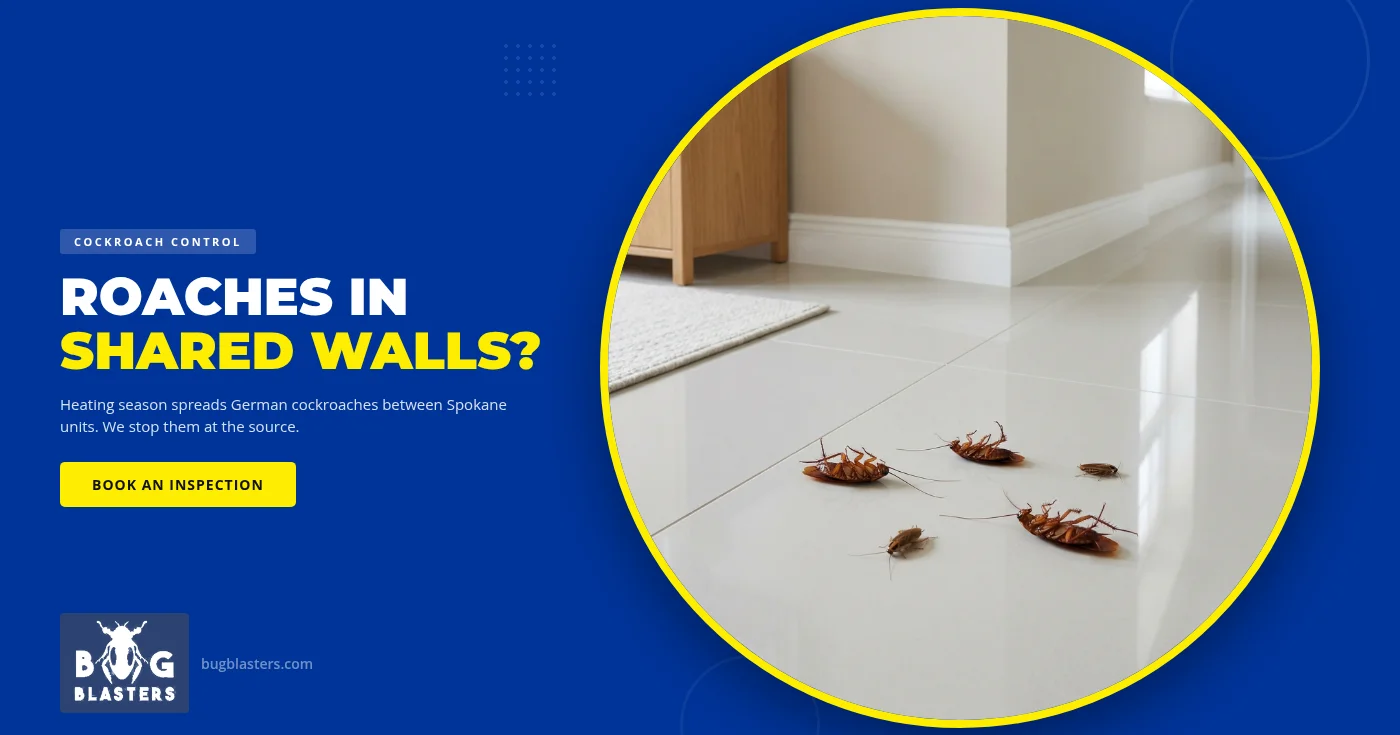
When the furnace kicks on for good in November, many renters notice something unwelcome: small, light-brown roaches scattering from under the toaster when the kitchen light flips on. If you live in an apartment, duplex or older converted house, those roaches may not have started in your unit at all. Here at Bug Blasters, calls about German cockroach control in Spokane pick up sharply once heating season settles in.
German cockroaches can’t survive an Inland Northwest winter outdoors. That means a winter cockroach infestation always starts indoors. It usually involves shared plumbing, hollow walls and a neighbor who may not know there’s a problem.
Below, we cover why heat helps roaches multiply and how they travel between units. We also cover the early signs to watch for, why store-bought sprays backfire, who’s responsible in a rental and what professional treatment looks like.
Why German Cockroaches Thrive in Spokane Apartments Once the Heat Comes On
German cockroaches are about ½ to ⅝ inch long and light tan to brown, with two dark stripes on the plate behind the head. They rarely fly and live almost entirely indoors, close to food, water and warmth. The University of Kentucky’s entomology guide to cockroach control identifies them as one of the most common and persistent cockroaches found in homes and apartments.
Warmth speeds everything up. Once the furnace runs most of the day, the warmest corners of a building become nurseries. November nights here typically drop well below freezing, so roaches gather behind refrigerators, under sinks, beside dishwasher motors and around water heaters.
Reproduction is what turns a few roaches into hundreds. A female carries her egg case until it’s nearly ready to hatch, and each case typically holds around 30 to 40 eggs. In warm conditions, young roaches can reach adulthood in roughly two months, give or take. Because she holds the case until hatching, the eggs are shielded from many treatments that only land on surfaces.
Older housing adds fuel. Many units in Browne’s Addition, the Lower South Hill and around Gonzaga are in older apartment blocks or converted houses. These buildings often share plumbing stacks and have decades of gaps around pipes.
How Roaches Travel Between Units Through Wall Voids, Plumbing Chases and Shared Vents
If you’ve ever wondered whether cockroaches move through plumbing and wall voids, the answer is yes. Those are their main highways. When one unit gets crowded or disturbed, roaches simply move to the next warm, quiet space.
Plumbing Chases and Pipe Penetrations
In multi-unit buildings, kitchens and bathrooms are usually stacked or placed back to back so they can share plumbing. The holes cut for drains and supply lines are rarely sealed tight. The vertical chase that carries those pipes works like an elevator between floors.
Wall Voids and Electrical Runs
The space inside a shared wall is dark, warm and undisturbed. Gaps around outlets, switch plates and cable entries give roaches easy doorways. In duplexes, the party wall between the two sides is often the main route.
Shared Vents, Hallways and Deliveries
Bathroom fan ducts, gaps under entry doors, shared laundry rooms and trash areas all connect units. Roaches also hitch rides in cardboard boxes, grocery bags and secondhand appliances, all of which pile up around the holidays.
Entomologists at North Carolina State University and elsewhere have studied multi-unit housing. Their work suggests that roaches move between neighboring units and that treating a single apartment on its own often fails. That matches what we see in the field: roaches in shared walls don’t respect lease lines.
Early Warning Signs of German Cockroaches in Kitchens and Bathrooms
German cockroaches in apartments usually leave clues before anyone sees a crowd. Check the warm, damp spots first: under the sink, behind the stove and fridge, inside cabinet hinges and around the bathroom vanity.
- Droppings that look like pepper or coffee grounds along cabinet edges and shelf corners
- Egg cases, which are small, tan, purse-shaped capsules tucked into cracks
- Shed skins from growing nymphs, often near hiding spots
- A musty, oily odor that builds as the population grows
- Roaches out in daylight, which often means hiding spots are already crowded
Signs German Cockroaches Are Coming From a Neighbor’s Unit
Some clues point next door rather than to your own kitchen:
- Sightings clustered along a shared wall
- Roaches appearing around pipe openings under the sink
- Activity that started soon after a neighbor moved in or sprayed
- Roaches in a clean unit with no obvious food source
If that sounds familiar, tell your landlord or property manager right away. The sooner the whole building is inspected, the smaller the job.
Cockroach allergens are also a well-known asthma trigger, especially for children. That makes early reporting about more than comfort.
Why Store-Bought Sprays Often Push Roaches Into the Unit Next Door
It’s natural to grab a can of spray or a bug bomb the moment you see roaches. In a shared building, that often makes things worse.
Most over-the-counter sprays and foggers use pyrethroid-type insecticides, which repel cockroaches. Instead of killing the colony, they drive roaches deeper into wall voids or straight through them into the neighboring unit. Your problem looks better for a week while your neighbor’s gets worse. Then the roaches come back.
Resistance is another problem. Many German cockroach populations no longer respond well to common store-bought products, so the survivors keep breeding. University research has found that total-release foggers do little to reduce German cockroach numbers. A big reason is that the mist never reaches the cracks where roaches actually hide.
Sprays can also contaminate the baits a professional places, which teaches roaches to avoid them. Foggers can leave residue on counters and dishes, and they can be a fire hazard near pilot lights if they’re used incorrectly.
Cockroach control in a multi-unit building works best when roaches eat a treatment and carry it home. Chasing them away doesn’t solve anything. If you’ve already sprayed, don’t worry. Just tell us what you used so we can plan around it.
Tenant and Landlord Roles: Coordinating Treatment Across a Whole Building
Should landlords treat every unit for cockroaches? The most reliable results come when every connected unit is inspected and treated on the same schedule. At a minimum, that means the infested unit plus the units above, below and on each side.
What Washington Law Generally Says
Washington’s Residential Landlord-Tenant Act sets out duties for both sides. RCW 59.18.060 generally requires landlords to handle pest control in rentals, with exceptions such as infestations caused by a tenant. Tenants have their own duty to keep units clean and sanitary. The details matter, so check the current law or talk to a housing professional about your situation. This isn’t legal advice.
What Tenants Can Do
Report sightings promptly and follow prep instructions. Allow access for inspections and follow-up visits, and avoid spraying on your own between visits.
What Landlords and Property Managers Can Do
Notify all affected residents and schedule treatment for connected units together. Seal pipe and wiring openings during turnovers, and keep a monitoring program in place. Routine general pest control for the building keeps an eye on more than one pest at a time. Clear communication keeps everyone on the same page.
How Professional Cockroach Treatment Works in Multi-Unit Homes
Here at Bug Blasters, we follow the approach university extension programs recommend, called integrated pest management. It combines inspection, targeted products, sealing and follow-up instead of blanket spraying.
Inspection and Monitoring
We start by finding where roaches are hiding and how they’re moving. We place sticky monitors under sinks, behind appliances and along shared walls. They show us activity levels and help us track progress over time.
Gel Baits and Growth Regulators
Instead of repellent sprays, we place gel baits in the cracks and crevices where roaches feed. Roaches eat the bait and carry it back to their hiding spots, where it reaches others in the colony. Insect growth regulators stop nymphs from maturing and reproducing, which is key to breaking the egg-case cycle.
Follow-Up Visits and Sealing
Eggs hatch on their own schedule, so one visit is rarely enough. Follow-up visits let us re-bait, check monitors and catch new hatchlings. Our cockroach treatment for duplexes and apartment buildings also includes recommendations for sealing gaps around pipes and wiring, so roaches lose their highways.
Winter is prime time for mice to use those same gaps, so we often pair roach work with rodent control. Every technician on our team is licensed in Washington.
Simple Habits That Keep Cockroaches From Coming Back This Winter
Treatment does the heavy lifting, but daily habits decide how fast roaches disappear and whether they return. Think of it as cutting off their supplies while the baits work.
- Wipe counters and stovetops every night, and don’t leave dishes in the sink overnight.
- Store food, including pet food, in sealed containers.
- Take trash out daily and keep lids tight.
- Fix dripping faucets and dry the area under sinks. Moisture draws roaches.
- Vacuum crumbs around the toaster, under appliances and along baseboards every week.
- Break down cardboard boxes and get them out quickly, especially after holiday deliveries.
- Inspect secondhand appliances and furniture before bringing them inside.
- Avoid store-bought sprays between visits, since they can make roaches avoid professional baits.
- Ask your landlord to seal gaps around pipes under sinks and behind appliances.
None of these steps is complicated. Together, they cut roaches off from the warmth, food and water that make heating season so friendly to them. If a neighbor mentions roaches, encourage them to report it too. One untreated unit can reinfest the whole building.
Frequently Asked Questions About German Cockroach Control in Spokane
Why do cockroaches spread between apartments in winter?
Heating season keeps buildings warm and people indoors, so roaches breed faster and populations grow. When hiding spots get crowded or someone sprays, roaches move along plumbing and wall voids to the next warm unit.
How do I get rid of German cockroaches in a Spokane apartment?
Report the problem to your landlord and skip the foggers and sprays. Then arrange a professional inspection that includes the neighboring units. Baits, growth regulators, sealing and follow-up visits, combined with good sanitation, are the most reliable path.
How long does it take to get rid of German cockroaches?
It depends on the size of the infestation and how many units are involved. Many treatments show a noticeable drop within a few weeks. Full control usually takes several visits to catch new hatchlings.
Can I stay home with kids and pets during treatment?
In most cases, yes. We place gel baits in cracks and crevices out of reach instead of spraying them across open surfaces. We’ll walk you through any prep steps and tell you if anything needs to stay off a treated area for a while, so you have peace of mind.
Book German Cockroach Control in Spokane With Bug Blasters
Heating season doesn’t have to mean sharing your kitchen with roaches. The key to German cockroach control in Spokane multi-unit buildings is treating the whole connected space, not just one apartment. It also means acting before a few roaches turn into a building-wide problem.
Bug Blasters is a family-owned and operated team that has protected homes and rental properties across the Inland Northwest since 2017. Maybe you’re a tenant who just spotted a roach, or a property manager looking for a cockroach exterminator in Spokane, WA. Either way, we respond quickly and offer flexible payment options. Contact Bug Blasters today to schedule an inspection.
Why Do Spokane Renters and Landlords Call Us for Cockroach Problems?
German cockroaches in a shared building are a different challenge from a single-family home, and we build our approach around that. We don’t just treat the unit where someone spotted a roach. We look at how the building is connected and plan treatment around the plumbing chases, wall voids and shared spaces roaches use to travel.
Here’s what you can expect when you work with us:
- Quick response: Roach populations grow fast in heating season, so we work to get out to you promptly.
- Licensed technicians: Every technician and owner on our team holds a Washington pest control license.
- Targeted treatment: Our cockroach pest control relies on gel baits, growth regulators and monitoring instead of repellent sprays that scatter roaches next door.
- Support between visits: If pests show up between scheduled services, we come back at no extra charge.
- Payment options: We offer flexible ways to pay for tenants, homeowners and property managers alike.
- More than roaches: We also handle general pest control and rodent control, plus crawl space and attic clean-outs and insulation installation.
We’re a family-owned and operated business that has been serving the Inland Northwest since 2017. We treat every home and rental like it belongs to one of our own neighbors. Whether you manage a duplex or rent a single apartment, we’ll help you coordinate a plan that covers the whole building. Reach out to us to schedule your inspection.