
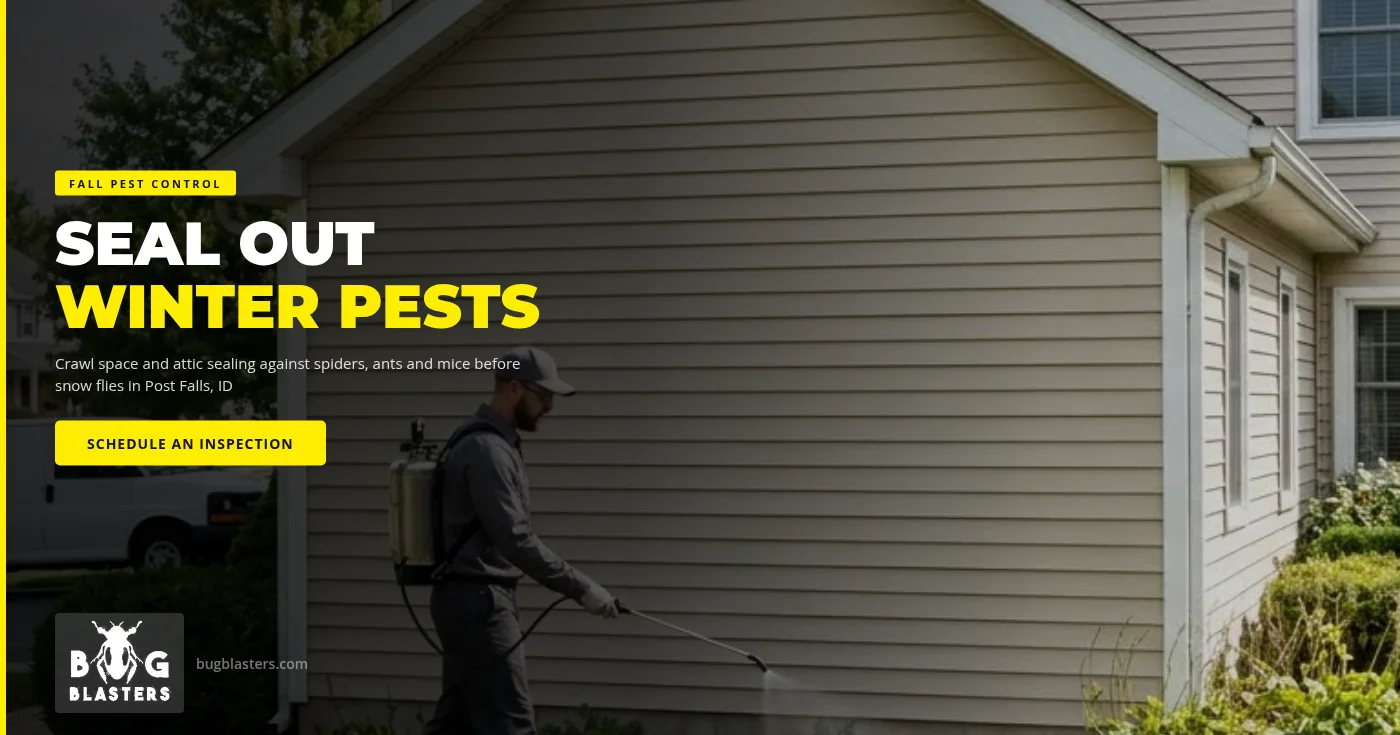
The first hard frost changes everything overnight. One morning the lawn is crunchy and white, and within days the spiders, ants and mice that spent summer outdoors are scouting for a warmer place to wait out winter. Too often, that place is your crawl space or attic. That’s why fall pest control in Post Falls is less of an extra and more of a deadline. What gets sealed before snow flies decides what you hear scratching in the ceiling come January.
Here at Bug Blasters, we’re a family-owned and operated team that has worked with North Idaho homeowners since 2017, and we see the same pattern every year. Once nights settle into the 20s, overwintering pests push through gaps most people never notice. A well-timed general pest control visit paired with solid sealing work is the best defense we know.
Below, we explain why cold weather triggers the rush, which pests to watch for, the warning signs they’ve moved in, a practical sealing checklist, when an insulation cleanout makes sense and how a late-fall treatment pays off. For local help right away, visit our page on pest control in Post Falls.
Why the First Hard Frost Triggers a Pest Rush Into Post Falls Homes
Insects and spiders are cold-blooded, so their activity follows the thermometer. As daytime highs slip into the upper 30s and low 40s and overnight lows drop into the 20s, they stop foraging and start hunting for stable, sheltered spots. Mice don’t hibernate at all. They simply need shelter, food and nesting material, and a house offers all three.
Our area sits in Kootenai County at roughly 2,100 feet of elevation. The first light frost often arrives in early-to-mid October, but it’s November’s sustained freezes and first measurable snow that typically send the biggest wave toward homes. Averages vary from year to year, so National Weather Service climate data is worth a look if you like to plan ahead.
Local housing makes timing even more important. Many older homes here were built over vented crawl spaces, which give pests a dark, protected staging area right under the floor. Meanwhile, new construction keeps spreading across former fields and timber on the Rathdrum Prairie. When those fields are harvested or cleared, the mice living there don’t disappear; they move toward the nearest warm foundation. Put those factors together and late fall becomes the busiest entry season of the year.
Which Pests Head for Crawl Spaces and Attics in November: Spiders, Ants, Mice and Overwintering Insects
Not every fall invader behaves the same way, and knowing who’s knocking helps you decide what to seal and what to treat.
Spiders
Many homeowners notice more spiders in fall, largely because wandering males leave their webs to look for mates. Hobo spiders and giant house spiders are both common here. Hobo spiders were once blamed for serious bites, but more recent research doesn’t appear to support that reputation. They’re still unwelcome, and our spider pest control service targets the corners, basements and crawl spaces where they settle.
Ants
Carpenter ants are one of the most significant structural pests in the Inland Northwest. They nest in wet or damaged wood, and crawl spaces with moisture problems are prime real estate. Because activity slows in cold weather, seeing ants indoors mid-winter can be a sign that a colony is nesting inside the house.
Mice
Deer mice and house mice are the classic first-frost invaders. Common guidance says a gap about the size of a dime is enough for a mouse to squeeze through. Once inside, they nest in insulation and stored boxes. If you already suspect activity, our rodent control team can help.
Overwintering Insects
Boxelder bugs, western conifer seed bugs, cluster flies and Asian lady beetles gather on warm south- and west-facing walls, then slip in around siding, window frames, soffits and attic vents. Fact sheets from University of Idaho Extension and similar regional programs describe these as nuisance pests: they generally don’t breed indoors or damage the structure, but they can appear by the dozens on sunny winter days.
Warning Signs Pests Have Already Moved Into Your Crawl Space or Attic
Sometimes the invasion has started by the time the first snow sticks. A flashlight check, or simply paying attention at night, can tell you a lot. Watch for:
- Droppings along joists, on top of insulation or near stored items.
- Scratching or scurrying sounds in walls or ceilings, especially after dark.
- Tunneled or flattened insulation, which often marks rodent travel routes.
- Gnaw marks on wood, wiring, boxes or plastic pipes.
- A musty or ammonia-like smell near the attic hatch or crawl space access.
- Clusters of insects on upstairs windows or around light fixtures on warm afternoons.
- Webs and egg sacs collecting in rafters and around vents.
- Wood shavings near damp framing, a possible sign of carpenter ants.
If you spot droppings, resist the urge to grab a broom or vacuum; we explain why in the cleanout section below. And if you notice two or more of these signs together, it’s a good time for a professional inspection rather than a wait-and-see approach. Overwintering pests tend to stay hidden, and rodent populations can grow quietly until spring makes the problem obvious.
A First-Frost Sealing Checklist: Vents, Foundation Gaps, Utility Lines and Rooflines
Effective pest exclusion before winter means finding the openings pests already use and closing them with materials they can’t chew through. Mice gnaw through foam, rubber and soft plastic, so the CDC recommends tougher options such as steel wool with caulk, hardware cloth, sheet metal or cement. Work your way around the house:
- Crawl space vents: Confirm every screen is intact and fastened. Replace torn or rusted screens with hardware cloth.
- Foundation gaps: Look for cracks, settled sill plates and gaps where siding meets concrete.
- Utility lines: Seal around gas lines, water pipes, dryer vents and cable or electrical entries. These are common mouse highways.
- Doors: Replace worn door sweeps and weatherstripping, and check garage door seals for chewed corners.
- Windows and siding: Caulk gaps around frames and trim, especially on sunny walls where insects gather.
- Rooflines: Inspect soffit and gable vents, roof returns and the chimney. A chimney cap helps keep critters out.
- Yard habits: Stack firewood away from the foundation, pull mulch back from siding and clean gutters so water drains away from the crawl space.
A note on closing crawl space vents for winter: the right answer depends on whether your crawl space is designed to be vented or has been encapsulated. Blocking vents in a vented crawl space can trap moisture, which invites carpenter ants and mildew, so get advice specific to your home before covering anything.
How Damaged Insulation and Debris Invite Pests and When a Cleanout Makes Sense
Insulation is supposed to keep heat in, but once rodents arrive it can become a nest instead. Mice tunnel through fiberglass and cellulose, pack it down and soil it, which reduces its effectiveness and leaves odors behind. Old boxes, construction scraps and moisture also attract spiders, beetles and ants looking for shelter.
A cleanout often makes sense when insulation is visibly tunneled or stained, droppings are widespread rather than confined to one corner, odors linger after the pests are gone, or debris and moisture have built up.
Cleanup deserves care. Deer mice in our region can carry hantavirus, and the CDC’s hantavirus guidance advises against sweeping or vacuuming droppings because that can stir particles into the air. Instead, the CDC recommends airing out the space, soaking droppings with a bleach solution of about one part bleach to ten parts water and wiping them up while wearing gloves. Homeowners often handle small spots themselves, but a full attic or crawl space is usually a job for professionals.
Here at Bug Blasters, crawl space and attic cleanouts and insulation installation are part of what we do. We can remove contaminated material, seal entry points, treat for pests and install fresh insulation, so your attic pest control and crawl space pest control happen as one coordinated project instead of three separate ones.
Why Fall Pest Control in Post Falls Pays Off All Winter
Sealing keeps most pests out, but no home is perfectly airtight. A late-fall general pest treatment creates a protective barrier around the foundation, entry points and key interior areas, catching the spiders, ants and insects that slip past your caulk and screens. Treating before pests settle in is far easier than chasing them out of wall voids in February.
Here at Bug Blasters, we see clear benefits for homeowners who schedule in fall:
- Fewer spring surprises: Fewer pests overwinter inside and emerge on the first warm days.
- Early rodent detection: Our technicians check for droppings, gnaw marks and entry points at each visit.
- Support between visits: Maintenance customers get free in-between services if pests show up between scheduled treatments.
- Quick response when something changes.
- Payment options that make year-round coverage easier to plan for.
Every one of our technicians and owners holds an Idaho pest control license. Since the Idaho State Department of Agriculture licenses pesticide applicators, it’s always worth confirming that whoever treats your home is properly licensed. A year-round plan that starts in fall gives you steady coverage through winter and into spring ant season.
Frequently Asked Questions About Fall Pest Control in Post Falls
Is it too late in November to seal up my home in Post Falls?
Not at all. Earlier is better, but November is still prime time because pests are actively searching for entry points. Sealing now stops the next wave, and pairing it with a treatment handles anything already inside. Many caulks and sealants have temperature limits, so choose cold-rated products for exterior work or let a professional handle it.
Are hobo spiders dangerous?
Current research suggests hobo spiders aren’t the medical concern they were once thought to be. Still, any bite that looks unusual or worsens should be checked by a medical professional. Reducing clutter, sealing gaps and treating entry points keeps spider numbers down.
Can I clean up mouse droppings myself?
For small amounts, yes, if you follow the CDC’s hantavirus steps: ventilate, wet droppings with a diluted bleach solution, wear gloves and never sweep or vacuum. For widespread contamination, a professional cleanout is usually the better choice.
Protect Your Home Before the Snow Flies
The first frost is nature’s signal that pests are on the move, and the weeks before steady snow are your best window to stop them. Sealing entry points, cleaning out damaged insulation and scheduling a late-fall treatment work together to keep spiders, ants, mice and overwintering insects outside. Investing in fall pest control in Post Falls now means a quieter, cleaner winter later.
Bug Blasters is a family-owned and operated business that has served Post Falls and surrounding North Idaho communities since 2017, with licensed technicians who know local homes and seasons. When you’re ready, contact us to schedule your inspection, and let’s get your home sealed up before winter settles in.
How Do I Keep Spiders, Ants and Mice Out of My Crawl Space and Attic This Winter?
When the first hard frost hits, pests start looking for warm shelter, and crawl spaces and attics are at the top of their list. We help homeowners get ahead of that rush with a combination of sealing, cleanup and treatment that keeps spiders, ants, mice and overwintering insects outside where they belong.
Here’s how we approach first-frost protection:
- Inspection: We look for droppings, tunneled insulation, gnaw marks and the gaps pests are already using.
- Sealing entry points: We focus on crawl space vents, foundation gaps, utility lines and rooflines, using materials rodents can’t chew through.
- Crawl space and attic cleanouts: We remove contaminated insulation and debris and install fresh insulation when needed.
- Late-fall general pest treatment: A protective barrier catches the pests that find their way past seals and screens.
We’re a family-owned and operated team, and every one of our technicians and owners is licensed. Our maintenance customers get free in-between services if pests show up between scheduled visits, and we pride ourselves on a quick response when you need us. We also offer payment options so year-round coverage is easier to plan for.
Starting in fall means fewer pests settle in for winter and fewer surprises when spring arrives. For a full first-frost checklist, warning signs to watch for and guidance on cleaning up after mice, read our complete guide: First Frost Pest Invasions: Sealing Your Crawl Space and Attic Before Snow Flies.